
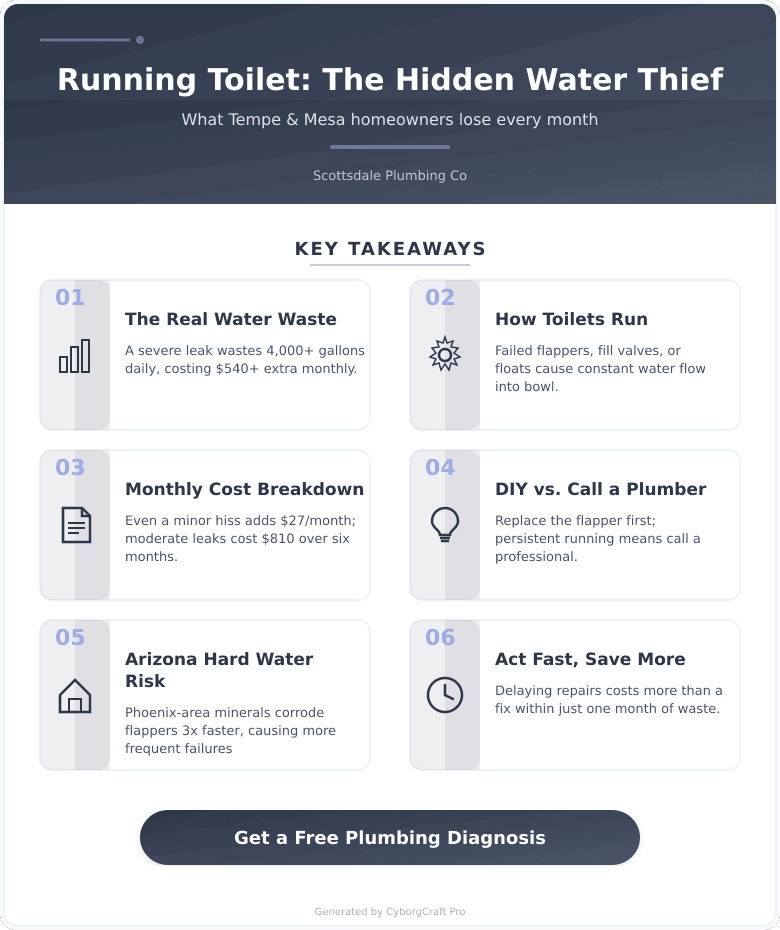
A running toilet is a plumbing fault where water continuously flows from the tank into the bowl without any flush being triggered, wasting significant water and driving up your utility bill every single day it goes unaddressed.
This guide focuses specifically on what running toilets cost Tempe and Mesa homeowners in 2025 – and what to do about it.
Running Toilet Definition: A running toilet occurs when the flapper valve, fill valve, or float mechanism inside the tank fails to seal properly, causing a constant trickle or flow of water into the bowl and forcing the tank to refill on a loop.
Here’s something most people don’t realize: that quiet hissing sound coming from your bathroom at 2 a.m. can waste a significant amount of water every single day. Household leaks including running toilets waste substantial volumes of water nationwide each year. In a water-scarce state like Arizona, that’s a real problem – not just for your wallet, but for the region.
At Scottsdale Plumbing Co, we see this constantly throughout Tempe, Mesa, and surrounding East Valley communities. The most common pattern we notice is a homeowner who has been ignoring a slow-running toilet for two or three months, then opens a $200-plus water bill and finally decides to act.
The Real Numbers: What a Running Toilet Costs in Tempe and Mesa
The water waste depends on how severe the leak is. Here’s a realistic breakdown based on local utility costs. Note that Tempe’s 2025 water rates include a base charge around $12+ per month with tiered volumetric rates subject to increases, not averaging $4.50 per 1,000 gallons.
| Leak Severity | Gallons Wasted Per Day | Monthly Waste | Estimated Monthly Cost |
|---|---|---|---|
| Minor (slow hiss) | 200 gallons | 6,000 gallons | $27 extra |
| Moderate (visible trickle) | 1,000 gallons | 30,000 gallons | $135 extra |
| Severe (constant run) | 4,000+ gallons | 120,000+ gallons | $540+ extra |
A moderate running toilet adds roughly $135 per month to your water bill. Over six months, that’s $810 – more than the cost of most toilet replacements. This is why acting fast matters.
Fix It Yourself vs. Call a Plumber: Which Approach Works?
Where DIY repair succeeds: Replacing a worn flapper is straightforward. Flappers cost $5-15 at any hardware store, and the repair takes under 20 minutes. Adjusting a float arm or replacing a fill valve is also manageable for someone comfortable with basic home repairs.
Where DIY repair fails: If the toilet is older, has mineral buildup from hard Arizona water, or the flush valve seat is corroded, a simple flapper swap won’t hold. You can also crack the tank if you overtighten components, which turns a $10 fix into a full replacement job.
Where calling a plumber succeeds: A plumber diagnoses the actual root cause instead of guessing. They can spot a cracked flush valve seat, a faulty ballcock assembly, or a supply line issue that DIY attempts miss entirely. They also carry the parts on the truck, so it’s done in one visit.
Where calling a plumber fails: If the repair is genuinely just a flapper and you’re comfortable doing it yourself, paying for a service call adds unnecessary cost. Professional diagnostic fees vary, so it’s worth asking about pricing when you call.
The verdict: Try the flapper first. If the toilet is still running after a new flapper and float adjustment, stop guessing and call a plumber. Ongoing water waste will cost you more than the service fee within a month.
Thinking about this for your situation? Let’s talk. We’ll walk you through your options – no pressure. Contact us for a straight answer on whether your toilet needs a simple fix or something more.
Why Arizona Homes Are Especially Vulnerable
The Phoenix metro’s notoriously hard water accelerates mineral buildup inside toilet tanks. That buildup corrodes flappers faster than average, meaning a flapper that might last five years in Seattle might last 18 months here. Hard water deposits are a well-documented contributor to plumbing wear and excess water use in Maricopa County households.
Calcium buildup: A chalky white crust that forms on tank components, preventing the flapper from sealing cleanly against the flush valve seat.
Flush valve seat damage: The plastic or ceramic ring the flapper presses against. Once it’s pitted or corroded from mineral deposits, no flapper will seal it – the seat itself needs replacement.
Your Running Toilet Action Plan
- Step 1 – Confirm it’s running: Drop food coloring into the tank without flushing. If color appears in the bowl within 15 minutes, water is leaking through the flapper.
- Step 2 – Inspect the flapper: Turn off the water supply valve behind the toilet, flush to empty the tank, and check the flapper for cracks, warping, or mineral buildup.
- Step 3 – Replace the flapper: Take the old flapper to the hardware store for an exact match. Install the new one and restore water supply. Test again with food coloring.
- Step 4 – Check the float: If the toilet still runs, confirm the water level in the tank sits about 1 inch below the top of the overflow tube. Adjust the float arm or replace the fill valve if needed.
- Step 5 – Call a plumber if it continues: At this point, the flush valve seat is likely the issue. This requires proper tools and replacement parts – our services include same-day toilet repair throughout Tempe, Mesa, and the East Valley.
Before You Call: What to Check and Gather
- ☐ Toilet brand and model number (usually printed inside the tank lid)
- ☐ Age of the toilet (10+ years old means parts may be discontinued)
- ☐ Recent water bill showing spike in usage
- ☐ Whether the running is constant or intermittent
- ☐ Whether you’ve already tried a flapper replacement
Key Takeaways for Tempe and Mesa Homeowners in 2025
- Even a minor running toilet wastes 6,000 gallons per month – enough to matter on your bill and in Arizona’s water supply.
- Hard water in Maricopa County shortens flapper lifespan – inspect yours every 12-18 months instead of waiting for symptoms.
- Most running toilets cost $5-$150 to fix depending on whether it’s a flapper or a full fill valve replacement.
- The food coloring test is free and takes 15 minutes – do it before spending anything.
- Delaying costs more than fixing – a moderate leak at current Mesa utility rates adds over $800 per year to your bill.
Frequently Asked Questions
How do I know if my toilet is actually running?
The food coloring test is the most reliable method – add a few drops to the tank and check the bowl after 15 minutes without flushing. You can also listen for a faint hissing or see visible ripples on the water surface inside the bowl when no one has flushed recently.
How much water does a running toilet waste per month in Tempe or Mesa?
A running toilet wastes between 6,000 and 120,000+ gallons per month depending on severity. At current East Valley utility rates in 2025, that translates to anywhere from $27 to over $500 in added water costs monthly.
Can I fix a running toilet myself?
Yes, if the problem is a worn flapper, which accounts for the majority of running toilet cases. Flappers cost under $15 and replace in about 15 minutes. If the problem is the flush valve seat or fill valve assembly, most homeowners benefit from professional help to avoid causing additional damage.
How long does a plumber take to fix a running toilet?
Most running toilet repairs take 30-60 minutes for a licensed plumber. If parts need to be ordered for an older or uncommon toilet model, a second visit may be required, though most East Valley plumbers carry standard components on their trucks.
Does Arizona offer rebates for fixing leaks?
Yes – the City of Tempe and City of Mesa both participate in water conservation rebate programs through the Salt River Project and Arizona municipal water authorities. As of 2025, some programs offer rebates for toilet replacement with WaterSense-certified models. Contact your local utility directly to confirm current eligibility and amounts.
How do I choose a reliable plumber in Tempe or Mesa?
Verify that any plumber holds a valid Arizona Registrar of Contractors license before scheduling service. You can check license status at the Arizona ROC website. Ask whether they charge a flat diagnostic fee or hourly, and confirm they carry liability insurance before work begins.
Stop Paying for Water That’s Going Nowhere
A running toilet is one of those problems that feels minor until it shows up on your bill. In the East Valley’s summer heat, when water use is already climbing, an undetected toilet leak can push monthly bills into genuinely painful territory. We serve homeowners throughout Tempe, Mesa, Chandler, Gilbert, Scottsdale, and surrounding communities – and this is one of the most fixable problems in any home.
Ready to stop the waste? Contact us today for straightforward answers and same-day availability. The team at Scottsdale Plumbing Co, serving the East Valley from our location in Scottsdale, AZ, is ready to help you get this handled fast – before next month’s bill arrives.

Write a comment: