
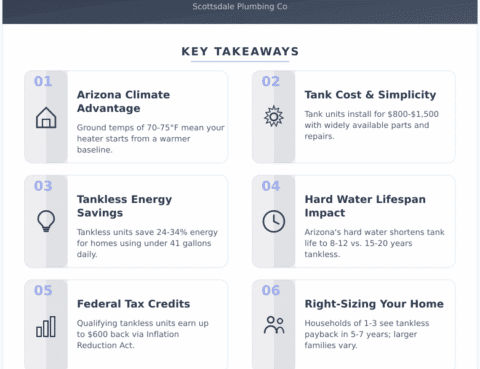
Choosing between a tank and tankless water heater in the Phoenix area involves more than brand preference. Arizona’s warm groundwater temperatures, hard water conditions, and high summer energy costs change the math compared to cold-climate states. Gas tankless units offer 24-34% efficiency gains and 15-20 year lifespans but cost more upfront and need annual descaling. High-efficiency tank and hybrid heat pump units often make more sense for larger households with simultaneous demand. Federal tax credits up to $600 apply to qualifying units in 2025, and utility rebates from APS and SRP can offset additional costs. Permits are required for most replacements in Scottsdale. Matching the right system to actual household usage – not just following general advice – is what drives long-term savings in an Arizona home.
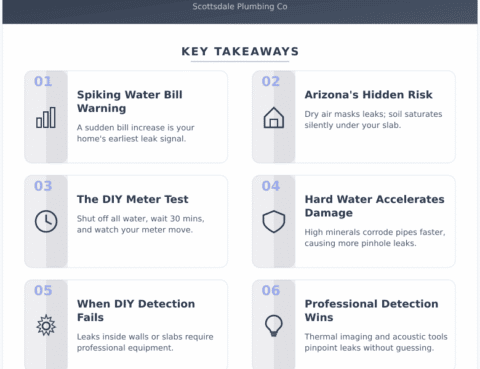
A sudden spike in your water bill is one of the clearest early signals of a hidden plumbing leak – one that could be quietly saturating the soil beneath your home’s foundation. Arizona’s dry climate makes these leaks especially deceptive because surface moisture evaporates before visible signs appear. A simple, free meter test can confirm whether water is escaping somewhere it should not be. From there, professional acoustic or thermal detection can pinpoint the leak location without unnecessary wall or slab damage. Arizona homeowners should verify their plumber holds an active ROC license, understand what their homeowners insurance may or may not cover, and act at the first billing spike rather than waiting. Slab leaks in Scottsdale’s hard-water environment tend to worsen quickly, and catching them early is almost always far less expensive than addressing the structural consequences later.
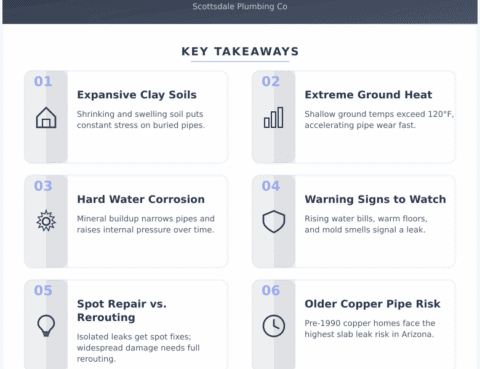
Arizona’s expansive clay soils, extreme ground temperatures, and notoriously hard water create conditions that wear down under-slab pipes faster than nearly anywhere else in the U.S. Slab leaks often go undetected for weeks, quietly driving up water bills and causing foundation damage before a single visible sign appears. Knowing what to look for – warm floor spots, unexplained pressure drops, or a meter that keeps spinning when all fixtures are off – can mean the difference between a $1,500 repair and a $10,000 structural fix. Repair options range from targeted spot fixes on isolated breaks to full repipes on older copper systems that have seen too many hard-water years. Arizona homeowners in 2025 should also know that permitted plumbing work and early insurance documentation both protect them financially when slab issues arise.
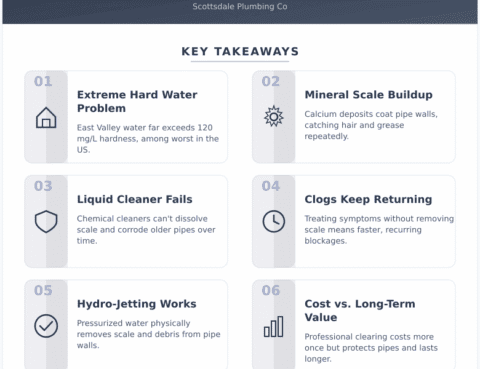
East Valley homeowners deal with drain clogs at a much higher rate than most of the country, and the reason comes down to water chemistry. The Phoenix metro area has some of the hardest municipal water in the U.S., and that mineral load builds up as scale inside pipes over time. That rough scale layer catches hair, grease, and soap far more aggressively than a clean pipe would – which is why clogs keep coming back even after treatment. Liquid drain cleaners can’t dissolve mineral scale, and their caustic chemistry actually degrades pipes with repeated use, especially in older East Valley homes. The real solutions are professional hydro-jetting to physically remove buildup and a whole-home water softener to stop mineral accumulation at the source. Enzyme treatments and annual professional maintenance keep things clear between service visits.
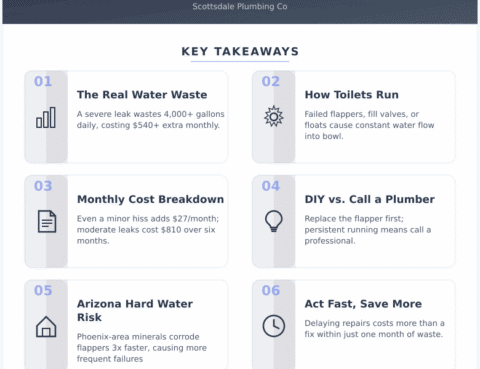
A running toilet is one of the most quietly costly problems in an Arizona home. Depending on severity, it can waste between 6,000 and 120,000 gallons of water per month – adding anywhere from $27 to over $500 to your bill without a single extra flush. In Tempe and Mesa, hard water from Maricopa County’s supply accelerates flapper wear, making this more common than homeowners expect. The fix is often simple and cheap if caught early: a $10 flapper replacement and a quick adjustment. But if the flush valve seat is corroded or the fill valve has failed, professional repair is the smarter move before months of waste stack up. Understanding what’s actually happening inside the tank – and knowing when to stop guessing – saves real money in 2025.

Arizona’s extreme summer heat reshapes the gas vs. electric water heater cost comparison in ways that surprise most homeowners. Incoming groundwater warms significantly by summer, and hot garages act as free pre-heating environments – both factors that benefit electric heat pump water heaters more than any other type. In 2025, heat pump units from brands like Rheem, AO Smith, and Bradford White qualify for up to $600 in federal tax credits plus APS and SRP rebates, making them the lowest lifetime-cost option for most Arizona homes. Gas water heaters remain competitive for large households with existing gas lines and high daily demand. Standard electric resistance units carry the highest running costs over time. Permits are required for installations in most Arizona cities, and verifying ROC contractor licensing is a must before any work begins.
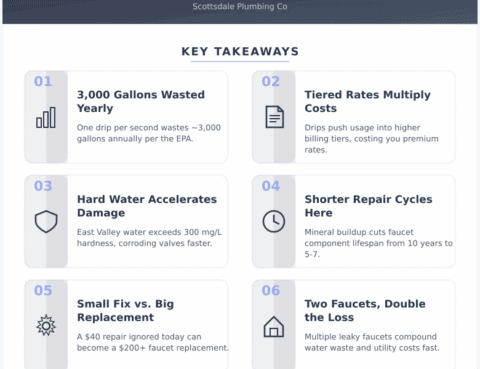
A dripping faucet may seem minor, but in Mesa and Gilbert, Arizona, the real cost over 12 months is hard to ignore. East Valley water rates use tiered billing, meaning even a slow drip can push your household into a higher usage bracket and multiply your losses. Add in the region’s notoriously hard water – which wears down faucet components faster than most of the country – and what looks like a $5 problem can quietly become a $150+ annual drain. This piece breaks down the actual dollar figures by drip rate, explains why Arizona homes face a tougher version of this issue than national averages suggest, and gives homeowners a clear five-step action plan to address the problem before the next billing cycle hits.
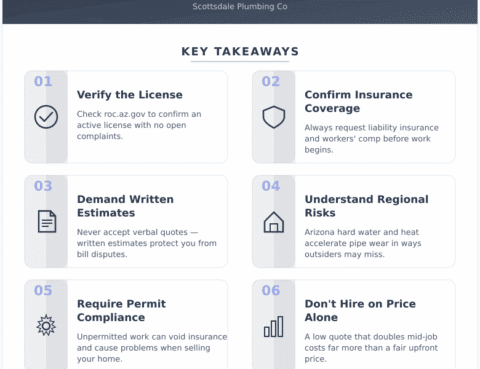
Hiring the wrong plumber in Tempe, Mesa, or Chandler can turn a minor repair into a major expense. This guide walks East Valley homeowners through the exact steps to vet a plumber before work starts – verifying their Arizona ROC license, confirming insurance, getting written estimates, and understanding when permits are required. Arizona’s hard water and extreme heat create unique plumbing stress that makes local knowledge matter. A clear checklist, a comparison of licensed versus unlicensed contractors, and answers to the most common hiring questions help homeowners make confident, informed decisions in 2025.
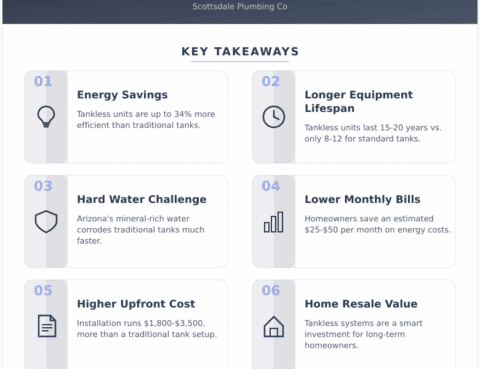
Homeowners in Paradise Valley and Chandler are moving away from traditional storage-tank water heaters faster than most people realize, and the reasons are practical. Arizona’s hard water accelerates tank corrosion, energy costs keep climbing, and tankless systems now offer federal tax credits of up to $600 for qualifying units in 2025. This breakdown covers total installation costs ($1,800-$3,500 for most gas units), top brand comparisons including Rinnai, Navien, and Rheem, permit requirements under Arizona ROC rules, and the annual maintenance routine that protects your investment in a hard-water market. Whether you’re planning a full replacement or just exploring your options, the financial case for going tankless gets stronger the longer you plan to stay in your home.
Mesa homes face unique water pressure challenges due to hard water and mineral buildup. This post reveals why common quick fixes don’t work long-term and explains professional solutions like hydro jetting that address the root cause. Local knowledge matters when dealing with Mesa’s specific water conditions and building practices.